In-person study in humanities and social sciences
Deadline: Not announced yet · From $8,850 · 15-17 · Stanford · In-person
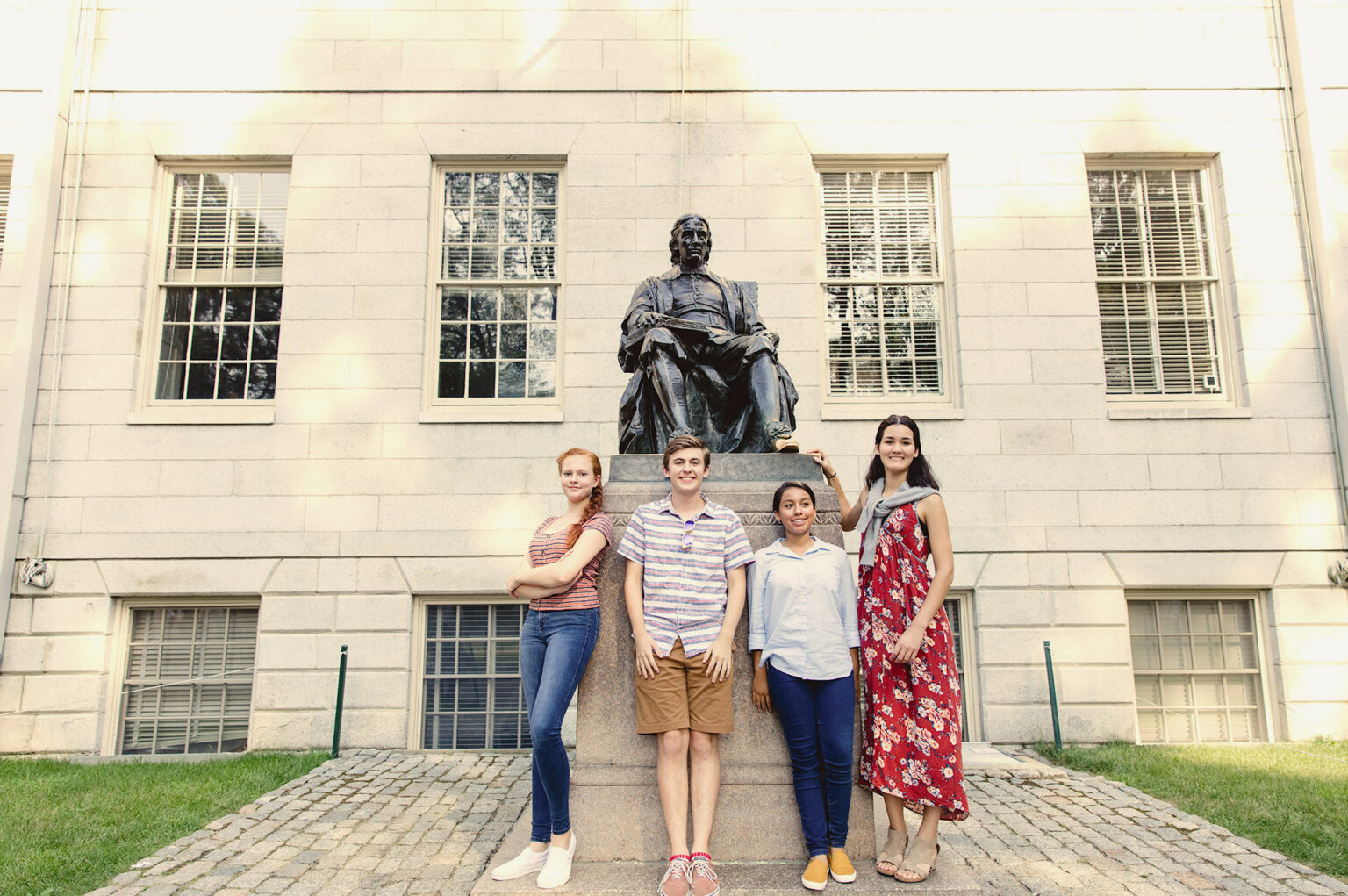
Harvard Summer School's Pre-College Program is a two-week stay on Harvard's campus in Cambridge, Massachusetts, where rising juniors and seniors take one non-credit, college-level course and live in a Harvard house. Each session offers around 30 courses in subjects from biology and psychology to law, philosophy and creative writing. Outside class you attend required lectures, workshops, social events and a trip, with proctors living alongside you.
 Sean Stevens · Sources
Get the key facts by email
The dates, costs and how to apply, all in one place.
Why it's worth it
You get a genuine seminar, with classes that typically run 12 to 18 students under Harvard-affiliated instructors, and the one price also covers your room, meals, activities and insurance, so the two weeks are a full rehearsal of college life rather than a day course.
What it asks of you
Your days are spoken for, between class, homework and required events, and Harvard bars any outside commitments during a session, so it won't fit alongside a summer job or another course.
Who should skip it
Students who aren't US citizens, permanent residents or DACA recipients and would need help with the $6,250, because Harvard's need-based scholarships are limited to those groups, and late applicants get no aid at all.
A catch for parents
Harvard follows FERPA, the federal student privacy law, and emails only the student, so staff won't discuss grades, schedules or account details with you, and your teenager has to keep track of every form and deadline.
You spend three hours a day in your one course, in one of three windows: 8:30 to 11:30 a.m., 12 to 3 p.m., or 3:15 to 6:15 p.m. Eastern Time. Harvard expects two to four hours of homework on top of that, and classes mix debate, problem sets, close reading of complex articles and presentations on your own research.
Meals keep a fixed rhythm, with breakfast from 7:30 a.m., lunch from 11:30 a.m., dinner from 5 to 8 p.m. and a late-night snack Sunday to Thursday. Around them you fit the Passport, which you need to pass: two Academic Exploration lectures with Harvard scholars and one event each in College Readiness, Social and Trips and Recreation. Past examples include talks such as The Anatomy of a Clinical Study, a time-management workshop, trivia, the Pre-College Prom, and outings to Newport, Red Sox games and whale watching. Proctors also run low-key evenings such as tie-dye, talent shows and picnics by the Charles, and the virtual admissions panels are optional.
Harvard takes rising juniors and seniors, meaning students who will finish high school and start college in 2028 or 2029, and the age window (at least 16 by 13 June 2027 and not turning 19 before 31 July 2027) has no exceptions because of Massachusetts law and university policy. Admission is selective, but Harvard weighs academic readiness, maturity and motivation rather than a cutoff. There's no minimum GPA, and PSAT, SAT or ACT scores are welcome but optional. Homeschooled students can apply, with an adult outside the family completing the counselor report.
If English isn't your first language, you need TOEFL iBT, IELTS or Duolingo scores. Harvard says successful applicants typically score above 103 on the TOEFL with 25 or more in writing, 7.5 on IELTS with 7.0 in writing, or 135 on Duolingo, and it doesn't accept Cambridge English or TOEFL ITP results. Because the program is non-credit, international students come on a B-2 visitor visa or through ESTA rather than a student visa, so check what applies to you with your US embassy early.
You can apply to only one Harvard Summer School high school program a year, so be sure this is the one you want before you submit.
Everything starts on Harvard's high school programs admissions page.
Open your account from 1 December 2026
Create it and fill in the application yourself, because Harvard won't accept one completed by a parent, counselor or agent.
Gather the pieces
Write the short essays on a laptop rather than a phone, send the counselor report and parent rules and media release links from inside the application, and collect transcripts from 9th grade through your fall 2026 grades.
Add the financial aid section if you need it
It sits inside the same application, asks for your family's 2025 tax return, W-2 forms and assets, and Harvard says more aid goes out in the early round.
Submit with the $75 fee by 11:59 p.m. ET on your round's deadline
Early closes 13 January 2027 with decisions on 17 February 2027, regular closes 10 February 2027 with decisions on 10 March 2027, and late runs to 31 March 2027, or earlier if course waitlists fill, with no aid.
Accept your offer and register for a course
The course you choose sets your session, and early admits register first, which matters because several 2026 courses filled up.
One session costs $6,325 in total for 2027, made up of the $6,250 program fee and the $75 application fee, which isn't refunded. The fee covers tuition, your room and meal plan, activities, and accident and sickness insurance that sits on top of your own health cover. If you stay for a second session, you pay the full $6,250 again.
Getting to Cambridge is up to you, since Harvard runs no airport shuttle, though it puts a taxi from Logan Airport at $35 to $40. You'll also pay for any textbooks, and you need to bring linens and a pillow or rent them on campus. International students should budget for a visa.
Harvard says payment deadlines are firm and there's no payment plan, although you can pay in smaller amounts before the deadline. It also refers to a payment plan in places, so ask before you count on one. Refund dates for 2027 aren't out yet. In 2026, dropping by 27 April got tuition and the program fee back in full, dropping by roughly two weeks before your session got half back, and after that nothing came back.
You leave with a Harvard transcript marked AR or NM ("requirements met" or "requirements not met") and possibly a written evaluation from your instructor, which in 2026 arrived about six weeks after each session. There's no letter grade and no college credit. To earn AR you have to attend every class in full, complete all assignments and get your Passport stamped, so check your final class time before booking travel home.
Harvard says plainly that attending doesn't guarantee admission to Harvard. It argues that doing well strengthens an application to any college, which is Harvard's own view rather than anything those colleges have said. The more concrete takeaway is the admissions help built into the two weeks, with workshops on the college essay and financial aid and panels with admissions officers from colleges around the country.
Resident Directors and Proctors, who are similar to college resident advisers, live in the Pre-College houses all summer, staff are on call around the clock, and they walk the buildings several times each evening. Every student checks in with their proctor by 10:59 p.m. and stays on their floor until morning, and program rules ban alcohol and drugs and set limits on guests. Harvard's policies and regulations lay out the full conduct rules.
You'll live in Leverett House (McKinlock Hall) or Lowell House. Buildings are coed, but rooms and bathrooms are divided by legal sex, roommate requests aren't honored, and rooms have no air conditioning. Check-in is a set Sunday afternoon window with no early arrival, and families are asked to leave after drop-off. If travel delays you, go straight to your house, because Massachusetts law stops under-18s from checking into a hotel alone.

Sean
Talk it through with Sean
“I can help you compare the programs you're considering, think through the practicalities and work out what makes sense for you.”
In-person study in humanities and social sciences
Deadline: Not announced yet · From $8,850 · 15-17 · Stanford · In-person
Online study in humanities, science, and social sciences
Deadline: Not announced yet · Cost not listed · 16-17 · Online · Online
Online study across science, engineering, writing, and business
Deadline: Not announced yet · From $3,200 · 13-17 · Online · Online
Save this program in Succeed to compare it with similar programs, dates, costs and formats in one place.
Compare with other programssummer.harvard.edu · Official page
summer.harvard.edu
summer.harvard.edu
summer.harvard.edu
summer.harvard.edu
summer.harvard.edu
summer.harvard.edu
summer.harvard.edu
Facts checked against the official page on 4 Nov 2026
Editor: Sean Stevens
Succeed has no commercial relationship with Harvard Summer School.
Spot an error? Report it