In person in Winston-Salem, ages 14 to 18, fees from $3,500.
Deadline: Not announced yet · From $3,500 · 14-18 · Winston-Salem · In-person
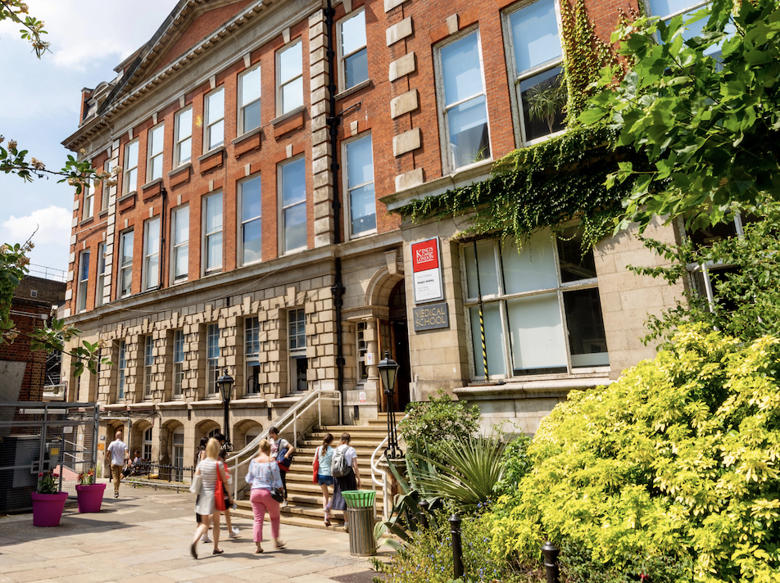
Artificial Intelligence: Foundations & Applications is a two-week, first-year university module that King's College London teaches on its central London campuses for undergraduates aged 18 and over. You study machine learning, neural networks, probability, search and logic, write code to build and test AI methods, and look at how they're used in fields such as healthcare and finance. Your mark comes from quizzes and a group project, and you can book the course with or without a room in a King's residence.
 Sean Stevens · Sources
Get the key facts by email
The dates, costs and how to apply, then 2 reminders: 30 Apr (2 weeks before) and 11 May (3 days before).
Why it's worth it
It's a real King's module, examined to the same standards as term-time courses and comparable to a 15-credit first-year module, so you come away with a mark your own university can choose to count toward your degree.
What it asks of you
King's expects Python and some algebra or algorithms before day one and sets a mini-module to finish before you arrive. It also puts the workload at 150 study hours, 45 of them taught, all within two weeks. That leaves little room for sightseeing beyond the evening events.
Who should skip it
Most students who haven't started university, because the course is pitched at first-year university level and asks for a 2:1 average, which is a university grade. King's runs a separate Pre-University Summer School for students aged 16 or 17.
You need to be 18 by the first day and studying, or have studied, a related subject at university, such as math, physics, engineering, the sciences, computer science or computational medicine. King's also welcomes professionals with substantial relevant experience. The course is aimed mainly at computer science and math students, but King's says it also suits economics and finance students who want to understand AI and computational methods.
The academic bar has three parts. You need a foundation in programming, with Python and a basic grasp of algorithms or algebra. You need an average of a 2:1, a UK upper second-class grade that King's equates to a 3.3 US GPA, although King's may consider a 3.0 depending on your year of study, degree and the strength of your application. And your English must reach C1 on the Common European Framework of Reference (CEFR), shown by a test such as IELTS 6.5 or by a degree taught in English.
There's no personal statement for this course, just a transcript or degree certificate and your English evidence. King's form also has a route for students who hold a university offer but haven't started yet. Since this course asks for a 2:1 average, email summer@kcl.ac.uk to check how King's would assess you before applying that way.
Classes run Monday to Friday, and you're on campus for 4 to 5 hours a day, usually either 9 a.m. to 1 p.m. or 2 p.m. to 6 p.m. King's releases the final timetable up to a week before the start, so keep both halves of the day free until then. Over the two weeks, King's plans about 12 hours of lectures, 8 of seminars and tutorials, and 25 of lab work and supervised learning.
Outside class, much of your time goes on independent study and the group project. Every student can join King's extracurricular program, and past events have included a welcome reception, a Westminster walking tour, an outdoor cinema, a comedy show, a Wimbledon watch party, pub quizzes and guest lectures.
You leave with a final mark on a King's Record of Agreed Results, its official transcript, plus a certificate of completion. The mark comes from quizzes worth 40% and a group project worth 60%, and you have to attend at least 80% of classes to pass. Grades are confirmed at a meeting usually held in early September, and the transcript follows within a month of that, so you may not have it until early October 2027.
The course is a Level 4 (first-year) module, comparable to 15 King's credits and typically counted as 3 to 4 US credits or 7.5 ECTS, the European credit system. Whether any of that counts toward your degree is up to your own university, so ask your study abroad office before you book. If you'd rather not be graded, you can attend at least 80% of classes and audit the assessments for a certificate of attendance instead.
Tuition alone is £2,650 for the two weeks, or £3,690 with accommodation. On top of either you pay a £65 application fee, which isn't refunded, although applicants from King's partner institutions don't pay it. That comes to £2,715 or £3,755 in all.
Tuition covers teaching, course materials, campus Wi-Fi, use of the library and other facilities, a completion certificate and the extracurricular activities, though not travel to them. The residential price adds a single en-suite room with a shower at Great Dover Street Apartments, a King's residence near Guy's Campus, with linen and towels provided. Meals aren't included with either option, so budget for food, London transport, your flights and the trip from the airport, which King's leaves you to arrange. If you need a UK visa or an electronic travel authorization (ETA), check its fee with the UK government.
You pay the full fee when you accept your offer, because King's doesn't take installments. If you withdraw, King's may refund part of the tuition at its discretion. Pairing this course with a second two-week course in the first session (5 to 16 July 2027) costs £5,100 for tuition or £7,180 with accommodation.
Applications go through King's information for applicants page.
Fill in your personal details, with your name and date of birth exactly as they appear on your passport or travel ID, and say whether you want King's accommodation.
Choose Artificial Intelligence: Foundations & Applications from the second two-week session.
Upload proof of C1-level English, or a transcript showing your degree is taught in English, along with your transcript or degree certificate.
Pay the £65 application fee and enter the payment reference, unless you're applying from a partner institution.
Answer the disability and emergency questions, accept the declaration and submit by 14 May 2027.
King's tells you the outcome within 5 working days.
If you're offered a place, pay the full fee, and King's confirms your place with a letter you can use in a visa application.

Sean
Talk it through with Sean
“I can help you compare the programs you're considering, think through the practicalities and work out what makes sense for you.”
In person in Winston-Salem, ages 14 to 18, fees from $3,500.
Deadline: Not announced yet · From $3,500 · 14-18 · Winston-Salem · In-person
In person in Cambridge, ages 13 to 18, fees from £5,995.
Deadline: Not announced yet · From £5,995 · 13-18 · Cambridge · In-person
In person in Oxford, ages 15 to 18, fees from £6,995.
Deadline: Not announced yet · From £6,995 · 15-18 · Oxford · In-person
Save this program in Succeed to compare it with similar programs, dates, costs and formats in one place.
Compare with other programskcl.ac.uk · Official page
kcl.ac.uk
kcl.ac.uk
kcl.ac.uk
kcl.ac.uk
kcl.ac.uk
kcl.ac.uk
kcl.ac.uk
Facts checked against the official page on 10 Nov 2026
Editor: Sean Stevens
Succeed has no commercial relationship with King's College London.
Spot an error? Report it