In person in Winston-Salem, 20 to 25 June 2027, ages 14 to 18, from $3,500.
Deadline: Not announced yet · From $3,500 · 14-18 · Winston-Salem · In-person
by University of Ottawa Engineering Outreach
Introduction to Computer Science (ICS3U) is a Grade 11 university-preparation course that the University of Ottawa's Faculty of Engineering Secondary School teaches in person over four summer weeks, and passing it earns a full Ontario high school credit. You learn HTML, CSS, JavaScript and Python, take a computer apart, build web apps such as an online game or store, and finish with an app you choose and build yourself. Speakers from Ottawa tech companies visit during the course, and there's no final exam.
 Sean Stevens · Sources
Get the key facts by email
The dates, costs and how to apply, all in one place.
Why it's worth it
The course is built around tools working developers use, such as GitHub, source control and unit testing, and 30% of your mark rides on an app you choose and build yourself, so you leave with a credit and something to show for it.
What it asks of you
Four weeks of full days, 9:00 a.m. to 3:45 p.m., in late July and August on the downtown campus. The Faculty of Engineering Secondary School expects you at every class, and missing too many can cost you the credit.
Who should skip it
Students who live beyond a daily trip to Ottawa or have a summer job or trip in that stretch, because ICS3U is offered only as a four-week summer class on campus and the credit depends on showing up.
Class runs from 9:00 a.m. to 3:45 p.m., Monday to Friday, with a 45-minute lunch break, so it's a full school day on campus. In 2026 there was no class on 3 August.
Hardware and operating systems (12 hours)
Comparing, taking apart and building computers, then installing and configuring software.
Web development and programming basics (30 hours)
Variables and control structures, with an assignment on loops, functions and arrays and a micro:bit project.
System integration and advanced programming (20 hours)
Connecting code to sensors and application programming interfaces (APIs), plus testing and debugging.
Industry and careers (12 hours)
How computer systems are used in the real world and what careers exist, assessed through a research project.
Software engineering and project management (36 hours)
Source control, unit testing, documentation and project management tools, leading into the final project.
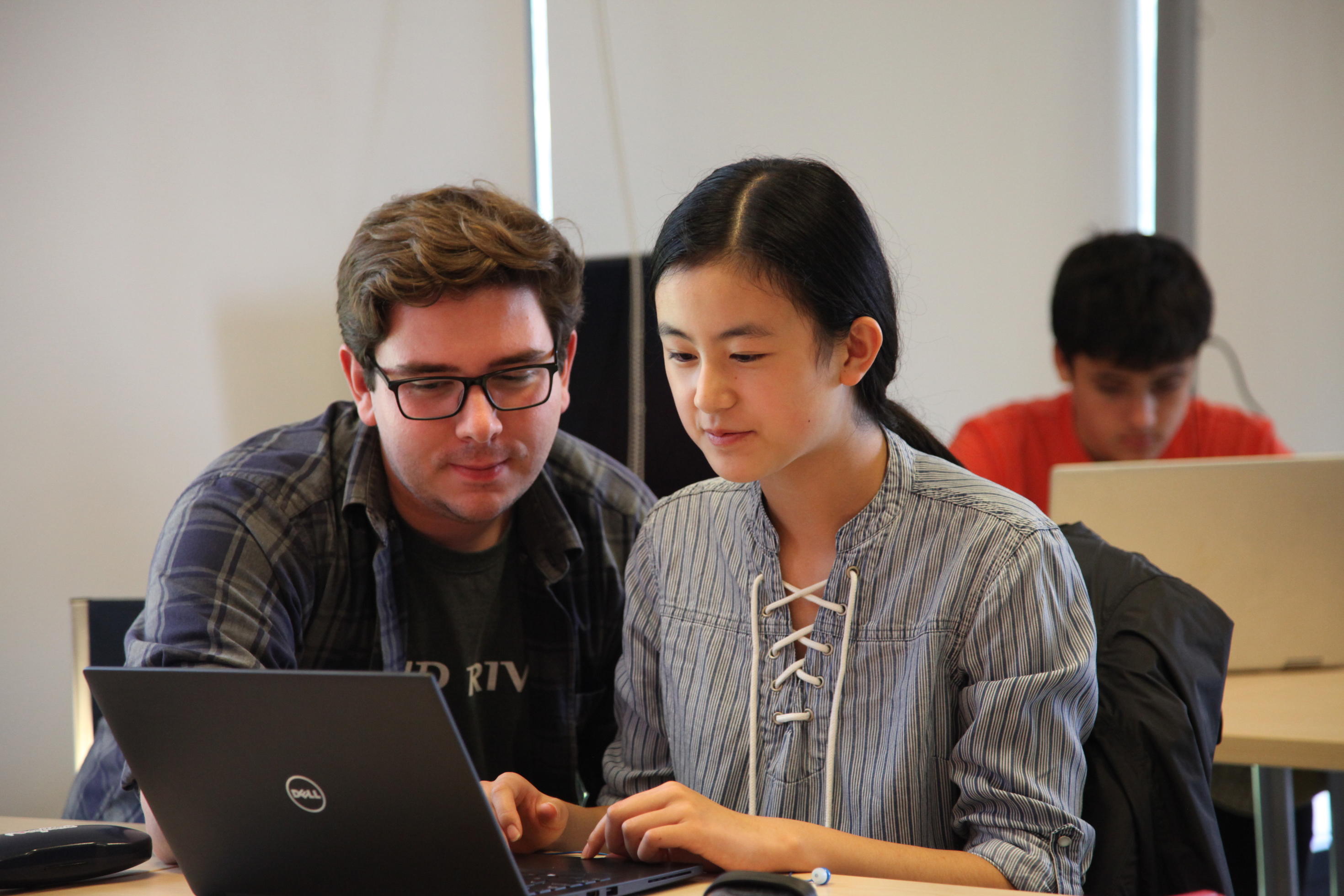
The Faculty of Engineering Secondary School says each day opens with a review of the previous lesson before moving on. Much of the teaching is live coding, where the teacher writes code in front of the class and sometimes makes mistakes on purpose to show how to fix them. After guided examples you practice alone or in pairs, with one student typing while the other directs, and the computer labs stay open to you during and after class hours.
The 110 hours are split into five units, and the final project takes about a week: an application of your choice, which the teacher approves before you start building.
The course is open to students in Grades 8 to 12 and is taught in English only, and the Faculty of Engineering Secondary School doesn't describe any selection beyond that. It's a Grade 11 university-preparation course with no prerequisites, although the school says it helps to have taken its Grade 10 coding course, ICD2O, or to have done some coding already.
A Grade 8 student would take it as a reach-ahead course, which needs the principal's written recommendation. The school's parent and principal permission form lists only its Grade 9 and 10 courses, though, so a Grade 8 student interested in ICS3U should check with the school before registering.
When you register, you'll need:
In summer 2026 the course cost $975 (Canadian), the same fee as the school's other summer credit courses except co-op. That paid for four weeks of teaching, with no textbook to buy and access to the course software and computer labs. The Faculty of Engineering Secondary School doesn't mention meals or housing, so budget for getting downtown and for lunch each day.
Bursaries are available in limited numbers for students from groups underrepresented in STEM, including Black, Indigenous and racialized students, girls, gender-diverse students and students with financial need. You apply on a separate form before registering, and in 2026 that form closed on 8 June, with successful applicants contacted by mid-June. The amount isn't published, and awards depend on available funding.
If your plans change, the refund shrinks quickly once you're within two weeks of the start:
| When you cancel | What you get back |
|---|---|
| Two weeks or more before the start | The full fee minus a $40 administrative fee |
| Less than two weeks before, up to the second day of class | 50% of the fee minus the $40 administrative fee |
| After the first two days of class | Nothing |
Finish with 50% or more and you earn a full 1.0 credit toward the Ontario Secondary School Diploma (OSSD), recorded as ICS3U, a Grade 11 university-preparation course. The Faculty of Engineering Secondary School says it received credit-granting authority from Ontario's Ministry of Education after a 2025 inspection, and at the end of term it sends your course and percentage to your home school for your Ontario Student Transcript. Report cards go to your parents by email, and there's a mid-term report halfway through.
For students who started Grade 9 in 2024 or later, computer studies is one of the subjects that can fill the diploma's STEM-related compulsory credit. You also leave with the app you built as your final project.
Two limits are worth knowing. Because it's a Grade 11 course, withdrawing after 10 instructional days is reported to your home school along with your mark at that point, and it may appear on your transcript. Whether a particular university program asks for ICS3U is up to that university.
In person in Winston-Salem, 20 to 25 June 2027, ages 14 to 18, from $3,500.
Deadline: Not announced yet · From $3,500 · 14-18 · Winston-Salem · In-person
In person in Cambridge, several sessions, ages 13 to 24, from £5,795.
Deadline: Not announced yet · From £5,795 · 13-24 · Cambridge · In-person
In person in Cambridge, several sessions, ages 14 to 18, from £6,995.
Deadline: Not announced yet · From £6,995 · 14-18 · Cambridge · In-person
Save this program in Succeed to compare it with similar programs, dates, costs and formats in one place.
Compare with other programsuottawa.ca · Official page
uottawa.ca
uottawa.ca
uottawa.ca
uottawa.ca
uottawa.ca
uottawa.ca
uottawa.ca
Facts checked against the official page on 11 Nov 2026
Editor: Sean Stevens
Succeed has no commercial relationship with University of Ottawa Engineering Outreach.
Spot an error? Report it