
Applications
Rolling admissions

A Nashville neuroscience summer course exploring working memory, decisions, and brain activity through real datasets, statistical reasoning, and coding.
Request your Program Guide. We'll email it within 24 hours.
or let us know if .
What Succeed checks
We review public program details such as eligibility, age range, cost, duration, location, format, accommodation, meals and application timing.
What Last verified means
Last verified is the latest date Succeed checked the public details shown on this page. Program dates, prices and availability can still change.
How official sources are used
Succeed uses official provider information where available, then rewrites it into a student-facing summary for comparison and planning.
Why some dates are reference dates
If the current cycle is not available, Succeed may show the latest verified cycle dates so you can understand typical timing.
Succeed is independent from this provider unless a partnership is clearly stated.
Current status
Applications open
Eligibility
Rising Grades 9–10; academic-fit review
Age range / Year group
Ages 14-16
Location / Region
Vanderbilt University, Nashville, Tennessee, United States
Cost
$2,850
Duration
1 week
Format
In-person
Application deadline
Rolling · Next cycle not announced yet. These dates are from the latest verified cycle and should be used as a reference only.
Save programThe Thinking Brain is a Vanderbilt Summer Academy course connecting working memory and decision-making with the prefrontal cortex. It turns everyday questions about remembering and choosing into scientific investigation.
Students work with real neuroscience datasets, statistical reasoning, and coding tools. The course suits curious learners who want to understand both brain function and the methods researchers use to study it.
The Thinking Brain: Unlocking Memory, Decisions, and the Prefrontal Cortex is a neuroscience course within Vanderbilt Summer Academy, run by Vanderbilt University's Programs for Talented Youth. It examines how working memory and decision-making depend on neuronal activity, with particular attention to the prefrontal cortex.
Students connect these ideas with hands-on analysis of real neuroscience datasets, statistical reasoning, and coding. The residential VSA experience combines accelerated classroom learning with organized activities and a supervised campus community.
Real neuroscience datasets give students a concrete way to connect explanations of cognition with measurable brain activity.
The combination of coding and statistical reasoning makes the course useful for exploring how biology and quantitative research work together.
Rana Mozumder's research on neuronal activity and working memory closely matches the course's academic focus.
Written instructor feedback offers a useful basis for reflecting on progress without grades or academic credit.
Students interested in why people remember and make decisions who also want to investigate scientific data and try coding.
You want a relaxed academic schedule, substantial unsupervised time, or a course that awards college credit.
This course offers a useful test of whether neuroscience research interests you beyond its headline discoveries. Working with real datasets and coding can help you discover whether you enjoy the reasoning behind explanations of memory and decisions.
The academic pace and supervised residential structure require sustained engagement. Its value rests on learning and instructor feedback; VSA awards no academic credit and does not indicate admission to Vanderbilt University.
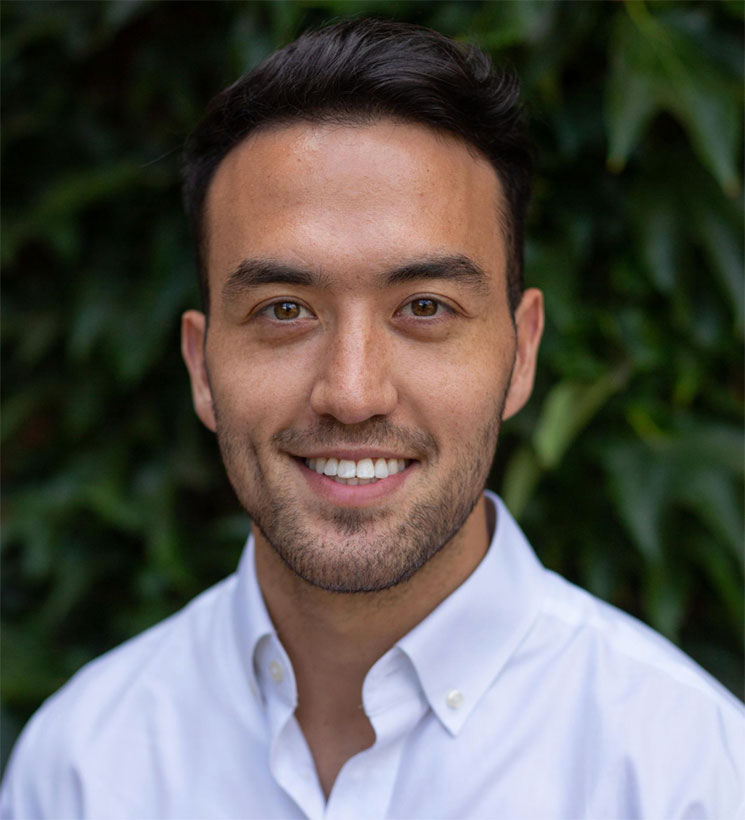
Sean
Founder, Succeed
Talk it through with Sean
“I can help you compare the programmes you're considering, think through the practicalities and work out what makes sense for you.”
20 minutes · No obligation to enrol
A practical overview of cost, accommodation, meals, dates and provider details to review before deciding.
Cost and what is included
$2,850; includes Course costs and study materials, Residential housing, All meals, Residential outings and activities.
Accommodation
Ingram Commons; mostly shared double rooms
Meals
All meals provided
Provider details
Review the Vanderbilt Summer Academy provider page and official sources before making a final decision.
Dates and logistics
1 week; Vanderbilt University, Nashville, Tennessee, United States.
What to check before committing
Confirm current dates, payment terms, travel arrangements, cancellation rules and what is included with the provider.
Compare this program with similar options before deciding on dates, cost, format and fit.
Compare with similar programsEffort level
High.
Best started
Begin four to six weeks before a published priority window to assemble documentation and request recommendations if using the portfolio route.
Main challenge
Connecting unfamiliar brain concepts with quantitative evidence.
Compare the test-score and portfolio routes before gathering application materials.
If using the portfolio route, request educator documentation early and draft the essay about your academic motivation and first-choice course.
Refresh basic graph reading and statistical reasoning as practical preparation for working with datasets.
Plan residential packing and travel around the session's designated arrival and departure windows.
Useful if
You want to test your interest in neuroscience, medicine, engineering, or research.
You investigate the brain systems behind working memory and decision-making, then connect theory with real neuroscience data. Statistical reasoning and coding tools help you look for patterns in electrical activity.
Explore working memory, decision-making, and the role of the prefrontal cortex.
Investigate how neurons communicate and how researchers study brain activity.
Consider how disruptions in these systems affect memory and choices.
Analyze real neuroscience datasets using statistics and coding tools.
Next cycle not announced yet. These dates are from the latest verified cycle and should be used as a reference only.
Applications
Rolling admissions
Programme dates
21-27 June 2026
Student check-in
21 June 2026
1:30–3:30 p.m. Central Time.
Student check-out
27 June 2026
9–11 a.m. Central Time.
| Milestone | Date | Timezone | Status | |
|---|---|---|---|---|
Applications | Rolling admissions | Local | Reference date | |
Programme dates | 21-27 June 2026 | Local | Reference date | |
Student check-in | 21 June 2026 | Local | Reference date | |
Student check-out | 27 June 2026 | Local | Reference date |
Be a rising 9th- or 10th-grade student.
Submit qualifying academic documentation for accelerated study.
Provide a transcript through either eligibility route.
Submit test scores or the required portfolio components.
Demonstrate English proficiency unless an exemption applies.
Have health insurance and complete required participation forms.
International students may apply.
Application fee
$50 — $100 for international applicants; nonrefundable.
Funding or discounts
What's included
Course costs and study materials, Residential housing, All meals, Residential outings and activities
Review VSA's grade requirements and choose the test-score or portfolio eligibility route.
Create or sign in to a SchoolDoc account through the official VSA application page.
Upload your academic documentation and rank up to four courses you would willingly attend.
If requesting financial aid, complete its application and upload the required tax documentation.
Pay the nonrefundable application fee and ensure all required components are complete.
Follow your admission notice for tuition payments, health documentation, and participation forms.
Next step with Succeed
or let us know if .
Succeed replies first, usually within a working day
The program covers the following focus areas.
Working memory
Explore how the brain briefly holds information to support learning, planning, and action.
Decisions and the prefrontal cortex
Investigate how the prefrontal cortex supports reasoning, planning, self-control, and choices.
Neuronal communication
Study how neurons communicate and how scientists investigate brain activity.
Neuroscience data analysis
Use real datasets, statistical reasoning, and coding tools to reveal patterns in electrical activity.
Curriculum may be adjusted based on participant interests and current developments.
A typical day during the program.
Approximately six hours of accelerated study each weekday.
Grades 7–10 students take part in staff-supervised activities.
Students remain in their residence hall after evening activities until breakfast.
The listed instructor, Rana Mozumder, is a Biomedical Engineering Ph.D. candidate at Vanderbilt University. In the Constantinidis Lab, he studies neuronal activity and cognitive skills such as working memory using electrophysiological and optogenetic experiments.
Each VSA course has a dedicated instructor and teaching assistant; instructors are subject to change.
Most rooms are doubles, with some triples; roommates are assigned randomly and disclosed on arrival.
After completing this program, participants often pursue:
Build understanding of working memory and decision-making.
Strengthen neuroscience data analysis and statistical reasoning.
Develop critical thinking and scientific problem-solving.
Receive written feedback and a performance evaluation.
Explore interests relevant to research, medicine, and engineering.
VSA awards no academic credit; recommendation letters are at the instructor's discretion.
The residential experience takes place at Vanderbilt University in Nashville, with housing centered on the Martha Rivers Ingram Commons. Students flying alone use PTY's required shuttle from Nashville International Airport, approximately 20 minutes from campus.
PTY cannot provide airline Unaccompanied Minor escorts.
Compare these options for related neuroscience, psychology, or biological science interests.
An in-person course combining psychology and neuroscience
Best for
Students comparing psychology and neuroscience
Online psychology study with neuroscience among its subjects
Best for
Students seeking online psychology study
Medical and biological sciences study in Cambridge
Best for
Older students comparing biology and medicine
Save this program in Succeed to compare it with similar programs, dates, costs and formats in one place.
Compare with other programsContent reviewed by
Co-founder, Succeed | Founder, Immerse Education (2012–2026)
Sean works at the intersection of academic enrichment, program quality and university preparation, with expertise in evaluating pre-university experiences for ambitious secondary school students.
Succeed uses official provider information where available, but keeps this public page focused on comparison and planning inside Succeed.
Course identity checked
Grade requirements reviewed
Session assignment checked
Tuition cycle distinguished
Financial assistance reviewed
Residential supervision reviewed
Assessment policy checked
We use source material to verify core facts, then show older cycle dates as reference when a current cycle is not available. Always check current application instructions before applying.
The Thinking Brain: Unlocking Memory, Decisions, and the Prefrontal Cortex
by Vanderbilt Summer Academy
Get the full picture before you decide
Request your Program Guide. We'll email it within 24 hours.
No account needed to compare programmes.