
Law and politics, ages 16 to 18, in person in Cambridge, from £5,995.
Deadline: Not announced yet · From £5,995 · 16-18 · Cambridge · In-person
Politics of Law & Economics (PLE) is one of three academic tracks at Yale Young Global Scholars, a two-week residential summer program on Yale's campus in New Haven. You live in a Yale residential college and go to lectures by Yale faculty on topics such as tariffs and citizen rule. Afternoons bring smaller seminars and a team capstone project that you present at the end. When you apply, you rank all three 2027 session dates and all three tracks, and you attend one session.
Get the key facts by email
The dates, costs and how to apply, then 2 reminders: 23 Dec (2 weeks before) and 3 Jan (3 days before).
Why it's worth it
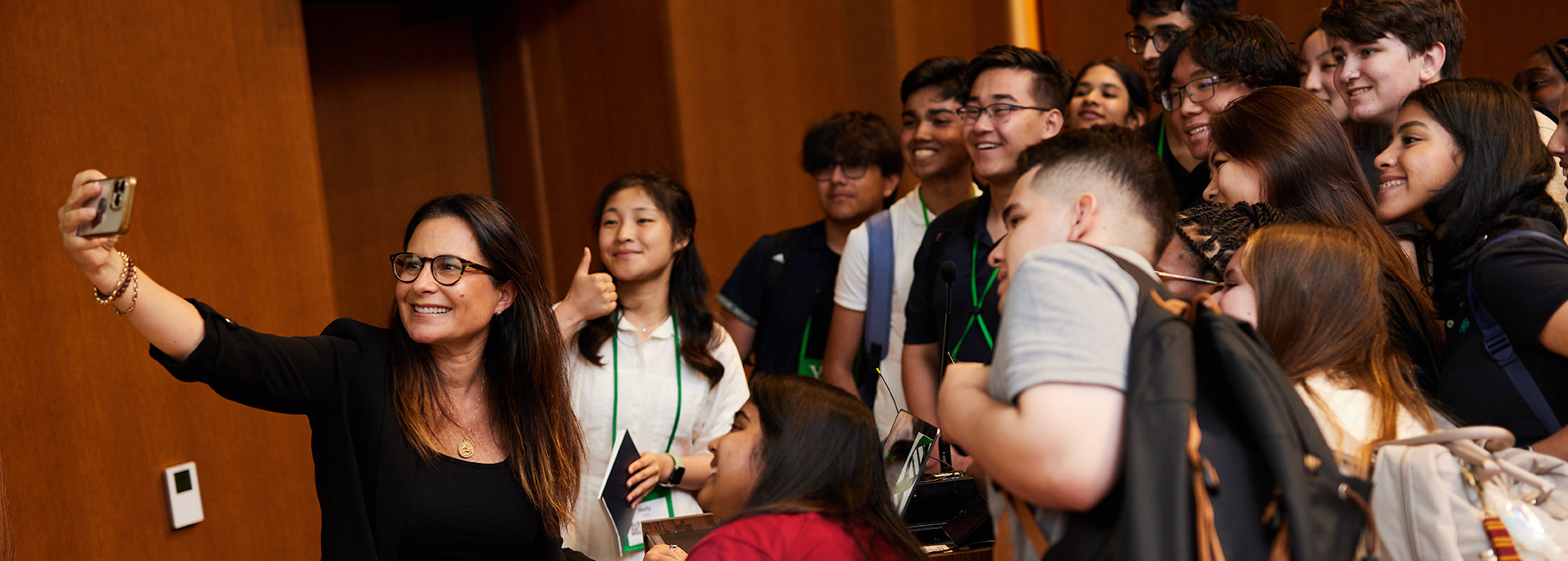
You hear Yale faculty on live questions such as tariffs and citizen rule, then argue them out with classmates in a program that draws students from more than 150 countries. Aid is open to international students on the same terms as Americans, so the price alone needn't rule you out.
What it asks of you
You'll need a careful application, with essays and a recommendation form, in by 6 January 2027. After that come two weeks away from home where nearly every hour is scheduled and parents can't visit the dorms.
Who should skip it
Students who want a grade or academic credit to show for their summer, because the program gives neither. It's also a broad survey across economics, law and government, so a student hoping to go deep into one field will cover a lot of ground without much depth in any of it.
PLE's lectures are given by Yale faculty and leading practitioners. The sample list for the track includes Daniel Markovits and John Witt of Yale Law School (on life after the age of growth, and on democratic crisis in America from the 1920s to the 2020s), political scientist Hélene Landemore on citizen rule and economist Amit Khandelwal on the economic impacts of tariffs. These are samples, so the 2027 lineup may differ.
Lectures are large, so the closer work happens in small seminars on narrower topics. Sample PLE titles include Technofeudalism and the Rise of the Subscription Economy and Monopoly Power and Market Entry, and Yale Young Global Scholars offers more than 150 seminars across its tracks each summer. The capstone project is mentored by the program's own instructional staff. Seminar sizes and a staff-to-student ratio aren't published, so if class size matters to you, ask the program before you commit.
Days are full from early morning to late evening. A typical weekday opens with quiet study time at 7:00am and breakfast from 7:30, then Family Time with your small group at 8:45 and a lecture from 10:00 to 11:30am. After lunch there's a seminar from 1:45 to 3:15pm and capstone project work from 3:45 to 5:00pm. After dinner comes a breakout discussion from 7:45 to 8:30pm, where you pick apart that day's lecture with a few peers, and the day winds down with free or work time.
On some afternoons a three-hour symposium, a hands-on activity on the track's themes, replaces the usual sessions. Evenings bring a speaker series where students give TED-style talks, a talent show and a late-night party after the final capstone presentations. Yale Young Global Scholars says most of the schedule is mandatory, with meals treated as short breaks and Sunday mornings kept for rest and free time. The 2027 schedule is tentative and may still change.
You can apply if you're a high school sophomore or junior (or the international equivalent) graduating in May or June 2028 or 2029 in the Northern Hemisphere, or in November or December 2027 or 2028 in the Southern Hemisphere. You also need to be 16 to 18 by 18 July 2027, and Yale Young Global Scholars makes no exceptions to that because of the rules for running programs for minors. Anyone who has attended a session before can't apply, but students who applied and weren't admitted are encouraged to try again.
Selection is holistic, and Yale Young Global Scholars treats the essays and short answers as important parts of the application because applicants come from such different backgrounds and have had different opportunities. It doesn't publish an acceptance rate. The program serves nearly 2,000 students across its sessions, and since PLE is one of three tracks, you're applying to the whole program and ranking where you'd most like to go.
Tuition for the two-week session is $7,500, which covers your room, three meals a day in Yale dining halls and course materials. Getting to New Haven is up to you. Yale Young Global Scholars says the most common route is to fly into JFK in New York and take a Go Shuttle van, which cost $79 each way in summer 2026. Most students who need a visa apply for a B-2 visitor visa, so check that cost with the US government. On top of that, budget for the $100 Regular Decision application fee, any fees the payment processor charges, and pocket money for laundry, snacks and an optional gym membership.
Need-based aid comes as a tuition discount of up to 100%, open to US and international students alike, and in 2026 Yale Young Global Scholars met 99% of admitted students' aid requests in full. A few named scholarships go further. The STARS Scholarship, for students from rural and small-town areas in the US, and the Young Leaders Scholarship, for Black, Hispanic or Latino, Indigenous and refugee students in the US and abroad, cover full tuition and travel. The New Haven Public Schools and Yale Young African Scholars alumni scholarships cover tuition only. Most students on aid still raise money for their own travel.
Tuition isn't refunded once paid, except in extreme cases such as a visa denial or a family medical emergency backed by documents, so be sure of your summer plans before the Regular Decision payment deadline of 15 March 2027.
Yale Young Global Scholars sets strict campus boundaries, and staff make sure every student understands them soon after arrival. Each student belongs to a small "family" led by a Residential Fellow, which meets in the mornings. Students must be inside their dorm rooms by 9:45pm, staff check suites at 10:00pm and lights go out at 11:00pm. Going to a religious service inside the boundaries means going in a group of three or more, and staff can help with trips beyond them.
For health, there's a wellness team on site, Yale Health on campus and Yale New Haven Hospital a short drive away. If a student misses more than two days through illness, parents are asked to collect them and take them home. Parents can't visit the dormitories, and housing is assigned by gender identity, with male, female and gender-inclusive options. If you're traveling alone by Amtrak, note that program staff can't sign for unaccompanied minors.
Everything runs through one application for all tracks, which you can start from the Yale Young Global Scholars how-to-apply page.
Check the eligibility rules and download the blank sample application Yale Young Global Scholars publishes, so you can draft your answers early.
Ask one recommender, such as a teacher, counselor, coach, club leader or employer, to complete the online recommendation form. Written letters aren't accepted, and neither are recommendations from family, family friends or paid tutors and counselors.
Arrange your transcripts for courses taken from age 14, either sent by your school or uploaded yourself as an unofficial copy.
Write the activities list, a 400-word essay, a 200-word response and two 280-character "fast take" answers, and rank the three session dates and three tracks.
If you need help paying, complete the financial aid section now, because you can't request aid once decisions are out. It's also the only way to reach the application fee waiver form, which a school official must finalize.
Submit by 11:59pm ET on 6 January 2027 and pay the non-refundable $100 fee, or hold off paying while a fee waiver is pending.
Expect your decision and aid offer by 10 March 2027, then accept and pay tuition by 15 March 2027 and send your travel plans by 5 May 2027.

Sean
Talk it through with Sean
“I can help you compare the programs you're considering, think through the practicalities and work out what makes sense for you.”
Law and politics, ages 16 to 18, in person in Cambridge, from £5,995.
Deadline: Not announced yet · From £5,995 · 16-18 · Cambridge · In-person
Ages 15 to 18 in Oxford, from $7,850, politics, law, economics and more.
Deadline: Not announced yet · From $7,850 · 15-18 · Oxford · In-person
Ages 14 to 18, San Luis Obispo, 4 to 16 July 2027, from $2,998.
21 Feb 2027 · From $2,998 · 14-18 · San Luis Obispo · In-person
Save this program in Succeed to compare it with similar programs, dates, costs and formats in one place.
Compare with other programsglobalscholars.yale.edu · Official page
globalscholars.yale.edu
globalscholars.yale.edu
globalscholars.yale.edu
globalscholars.yale.edu
globalscholars.yale.edu
globalscholars.yale.edu
globalscholars.yale.edu
Facts checked against the official page on 10 Nov 2026
Editor: Ben Stacy
Succeed has no commercial relationship with Yale Young Global Scholars.
Spot an error? Report it