A pre-college enrichment option in Barcelona
Deadline: Not announced yet · From $6,799 · 14-18 · Barcelona · In-person
BEE is Brown University's pre-college program abroad, where you spend 12 days in Oxford or Barcelona and learn through site visits as much as through lessons. In Oxford you take one course: a biotech course where you test a medicine on cells with University of Oxford scientists, or a history and psychology course on witch hunts. In Barcelona you take Intermediate Immersive Spanish and a course that traces the city's history through ten of its buildings. Both programs run as a residential cohort, and staff live alongside you.
 Sean Stevens · Sources
Get the key facts by email
The dates, costs and how to apply, all in one place.
Why it's worth it
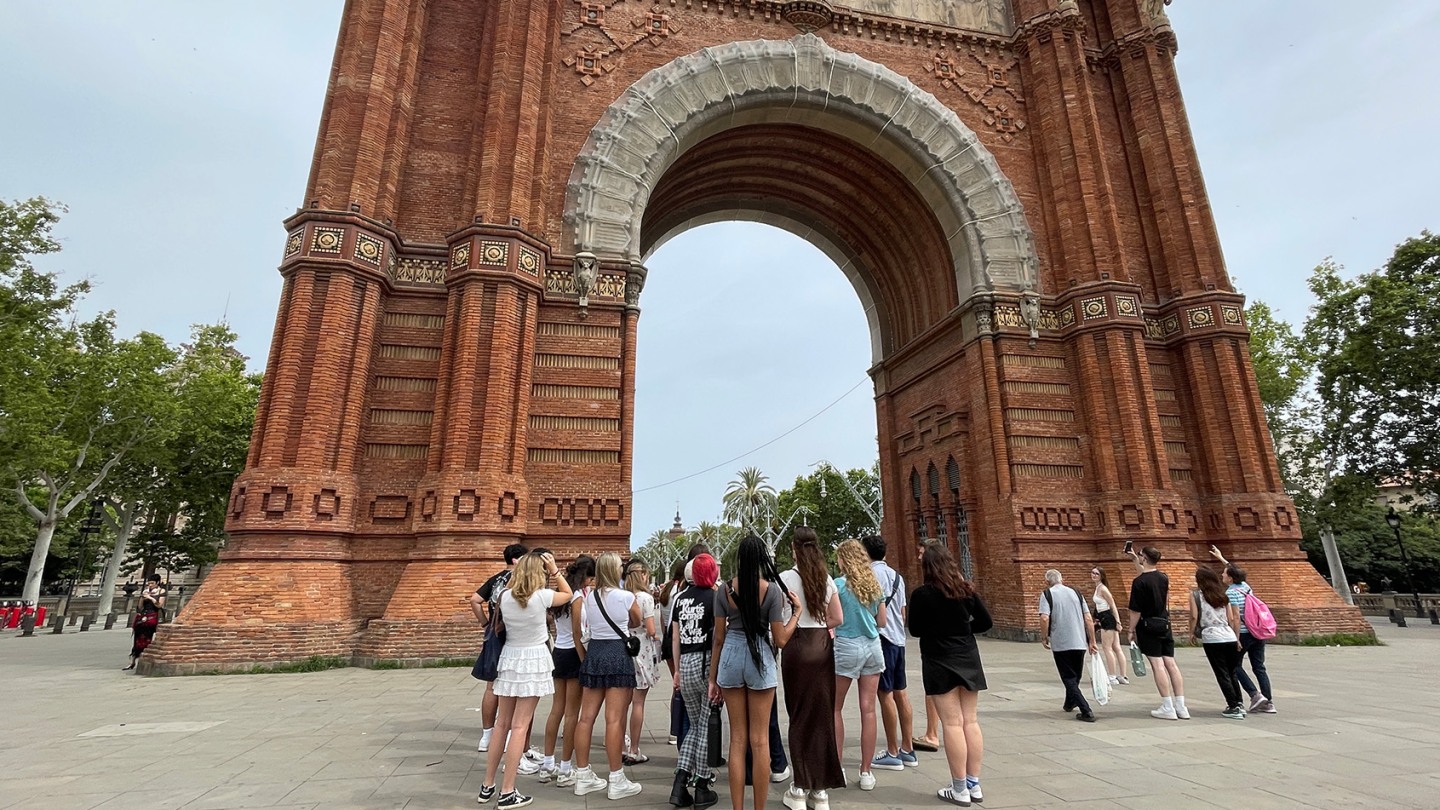
The places are the course. Oxford's biotech students test a medicine on cells alongside University of Oxford scientists and then meet the people who turn discoveries into companies, while in Barcelona the history course is built around visits to the buildings it studies.
What it asks of you
$8,656 plus return flights, and 12 days in which almost every hour is planned for you. You live, eat and learn with the same small group the whole time, which is great if you enjoy that and tiring if you need time to yourself.
Who should skip it
Skip it if you want independence abroad, since BEE keeps you with the group and doesn't let you explore the city on your own, or if you need academic credit.
Days run from breakfast at 8 a.m. to a 10 p.m. curfew, with lessons, labs and site visits filling the morning and afternoon and community activities every evening. Brown says you'll get one or two hours of free time a day, but not at a set time, and you're expected at everything, evening workshops included. The schedule below is Brown's example of a typical day, and the real itinerary can change.
Basics in Biotech (Oxford)
Testing a medicine on cells at the Cellular Imaging Core Facility, then Oxford University Innovation, the BioEscalator incubator and Oxford Science Enterprises, where you decide which discoveries you'd fund.
The Making of a Witch (Oxford)
The Bodleian Library, home to James I's Daemonologie, the Ashmolean Museum and Oxford Castle & Prison, which once held women accused of witchcraft.
Both Oxford courses
Punting on the River Cherwell, Blenheim Palace and Christ Church.
Barcelona
Buildings across the city, including Santa Maria del Mar, Palau de la Música, Sagrada Familia and Torre Agbar, plus cultural activities such as a cooking class.
| Time | Activity |
|---|---|
| 8 a.m. to 9 a.m. | Breakfast |
| 9 a.m. to noon | Morning site visit or lesson |
| Noon to 2 p.m. | Lunch and free time |
| 2 p.m. to 5 p.m. | Afternoon site visit, lab or lesson |
| 5 p.m. to 6 p.m. | Free time or dinner prep |
| 6 p.m. to 7 p.m. | Dinner |
| 7 p.m. to 9 p.m. | Evening activities |
| 9 p.m. to 10 p.m. | Free time |
| 10 p.m. | Curfew |
Brown warns Oxford students that they'll walk several miles a day, and on either program you're expected to do about two hours of work outside class each day. Brown says plainly that taking an online course at the same time isn't feasible. Where you spend those days depends on your course, and Brown calls its visit lists a sample that may change.
If you complete the program, you leave with a digital Certificate of Completion and a Course Performance Report, which is your instructor's written assessment of your work, with comments on how you engaged and a short narrative. Both arrive in early fall, and the certificate is a verifiable PDF with a 12-digit ID you can add to a resume. There are no formal grades and no credit, and Brown says the program doesn't produce a transcript.
Biotech teams finish by presenting what they learned, the witch-hunt course closes with a project on a modern case of scapegoating or misinformation, and in Barcelona the Spanish course ends with projects that connect you with the local community. Missing classes can cost you the certificate, and so can being dismissed.
BEE is open to students completing grades 10 to 12 who are 16 to 18 by 13 June 2027. You apply to Brown Pre-College as a whole and choose BEE once you're admitted. Brown reviews applications holistically, weighing academic performance, motivation, interests and English, and says it looks for an essay that shows intellectual curiosity, social maturity and self-motivation. Not every applicant is admitted, and the Oxford program was planned for about 24 students in 2026.
Essay
A 250- to 500-word essay on one of two prompts, one about learning something somewhere surprising and the other about a subject, activity or sport you're passionate about.
Grades
All your grades from this school year and last, in English and with your name on them. Unofficial transcripts, report cards and portal screenshots all count.
Recommendation
Optional overall, but Brown strongly suggests one for BEE applicants. It can come from a teacher, counselor, community leader or employer, but not a relative.
English
If English isn't your first language, you need a TOEFL iBT or Duolingo English Test score from a test taken on or after 1 July 2026. Successful applicants generally score at least 105 on TOEFL or 130 on Duolingo, although Brown says reaching those scores doesn't guarantee a place.
Your own work
Brown bans AI anywhere in the application except spelling and grammar tools, and it denies applications that break the rule.
Everything happens in Brown's Pre-College student portal.
Create one account in the student portal once applications open on 27 January 2027, and fill in the application form there.
Add your essay, grades, English test score if you need one and, if you're sending a recommendation, your recommender's details. Then pay the $80 fee or request a waiver if you qualify, because Brown won't review an application until every part is in.
Watch your email and portal for a decision. Decisions go out on a rolling basis from 3 February 2027, usually within 15 business days of a complete application.
If you're admitted, check that your program still has space, then pay the $500 non-refundable deposit and enroll in BEE: Oxford or BEE: Barcelona, since admission alone doesn't hold you a place.
Enroll by 5 May 2027, the last day to register for off-campus courses, which comes two days before Brown's general 7 May deadline. Brown warns that programs can fill before then.
If your program is full, join its waitlist. If a place opens, Brown gives you 48 hours to take it.
Either program costs $8,656 for the 12 days. For Oxford, Brown says activities, excursions, housing and meals are all included, so you'll mostly need spending money for the journey and a souvenir or two. On top of the fee come the $80 non-refundable application fee, return flights, any nights before or after the program, and course materials if your course needs them. Brown recommends travel insurance, and BEE students abroad are covered by International SOS medical and travel insurance, including emergency evacuation, at no extra cost. Don't book flights until Brown confirms the program is running.
To enroll, you pay a $500 deposit, which is only refunded if Brown cancels your course. If you enroll by 12 April 2027, the balance is due on 14 April 2027, and if you enroll later you have 48 hours to pay. Payments open in mid-March, and Brown takes cards and digital wallets but not checks, cash or wire transfers. Your refund shrinks the later you withdraw, as the table shows, and Brown doesn't reimburse travel costs.
Brown Pre-College's need-based Sibley Scholarships are for U.S. citizens, permanent residents and some other students living in the U.S. They're awarded first come, first served until the money runs out, so apply as soon as you've finished your admission application. Brown also has partner, Providence Public School District and employee-dependent scholarships. It offers no merit aid, and for summer 2027 it has no scholarships or fee waivers for international students.
| Withdraw in writing | Refund |
|---|---|
| On or before 14 April 2027 | 100%, less the $500 deposit |
| 15 to 28 April 2027 | 75%, less the $500 deposit |
| 29 April to 12 May 2027 | 50%, less the $500 deposit |
| After 12 May 2027 | None |
The on-site director, coordinator and student life managers live in the residence with students, and staff are available 24 hours a day. You stay with the group at all times and tell staff if you need to leave it, and every evening you check in with residential staff at 10 p.m. If you're late, staff call your parents, and if you still haven't checked in after a while, Brown informs the local authorities.
In Oxford you share a double room and bathrooms at St Edmund Hall, whose Porter Lodge is staffed around the clock. In Barcelona you get a single room with a private bathroom at Beyoo Marina. Oxford staff meet students at London Heathrow during a fixed arrival window and help them check in and find security at the end. If your flight falls outside those windows, you'll need to get to or from the group on your own. Staff can't act as the designated adult for unaccompanied minors, so check your airline's rules early. You manage your own medication. A serious breach of the code of conduct can mean dismissal with no refund or certificate, and parents then have 48 hours to arrange the trip home.

Sean
Talk it through with Sean
“I can help you compare the programs you're considering, think through the practicalities and work out what makes sense for you.”
A pre-college enrichment option in Barcelona
Deadline: Not announced yet · From $6,799 · 14-18 · Barcelona · In-person
A biology-focused research institute experience
Deadline: Not announced yet · From $3,500 · 14-18 · Winston-Salem · In-person
An in-person humanities institute experience
01 Feb 2027 · From $9,385 · 15-17 · Stanford · In-person
Save this program in Succeed to compare it with similar programs, dates, costs and formats in one place.
Compare with other programsprecollege.brown.edu · Official page
precollege.brown.edu
precollege.brown.edu
precollege.brown.edu
precollege.brown.edu
precollege.brown.edu
precollege.brown.edu
Facts checked against the official page on 18 Nov 2026
Editor: Sean Stevens
Succeed has no commercial relationship with Brown Pre-College Programs.
Spot an error? Report it