
Medicine Summer Programs in the UK
Compare UK medicine summer programs for high school students by who runs them, what students actually do, total cost and accommodation.
Last verified: 9 Oct 2026Reviewed by: Sean Stevens
9
2
5
13-19
0
Succeed compares what students actually do, who operates the course, and what families receive for the fee.
What we check: We review UK location, operator identity, age requirements, teaching activities, fees, and accommodation inclusions.
Official information: University and provider information grounds factual descriptions, while fit judgments are Succeed’s interpretation.
Last verified: This indicates when published details were reviewed, rather than guaranteeing that every feature will remain unchanged.
Changing details: Tutors, activities, fees, accommodation arrangements, and eligibility requirements can change between sessions.
Editorial judgments are Succeed’s own; reviewer Sean Stevens founded Immerse Education (2012–2026).
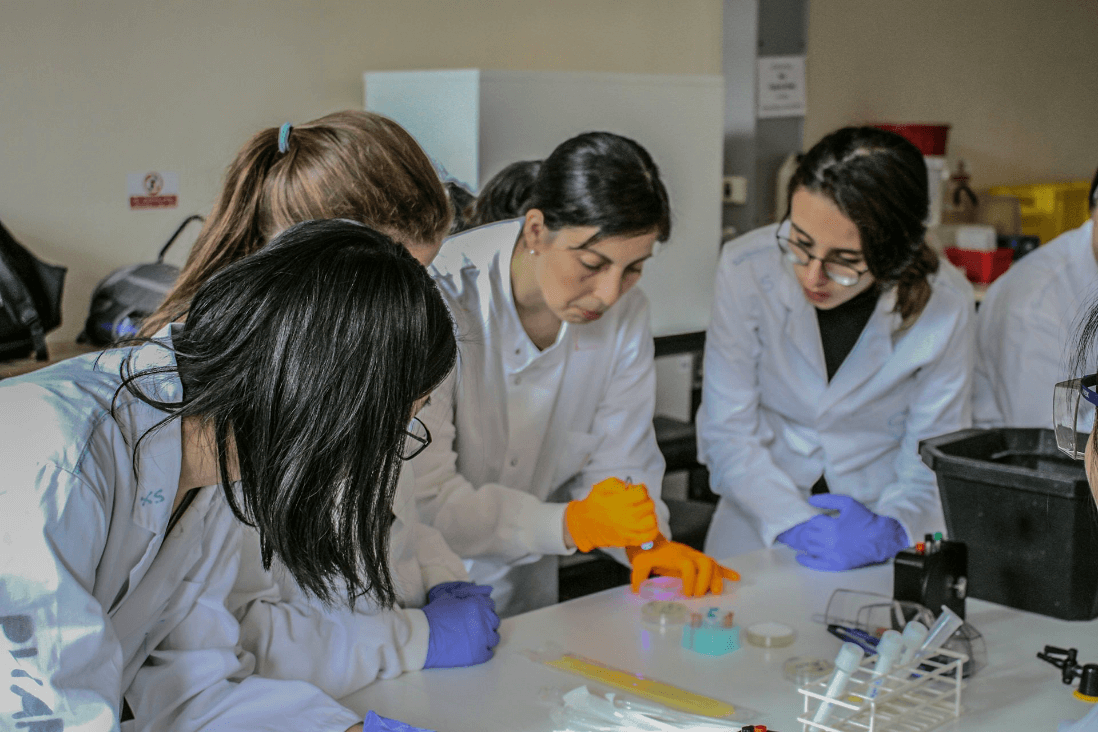
Medicine summer programs in the UK introduce students to medical science or healthcare through in-person learning. Activities can include lectures, laboratory practicals, simulations and visits to healthcare settings. Compare the activity itself before treating a course as clinical experience.
Some courses are run by universities themselves. Imperial College London and the University of Warwick both run medicine and life sciences courses for students aged 16 and 17. Many others are run by independent companies that use college or university buildings. Academy Royale International, for example, states that it is not associated with the universities whose facilities it uses.
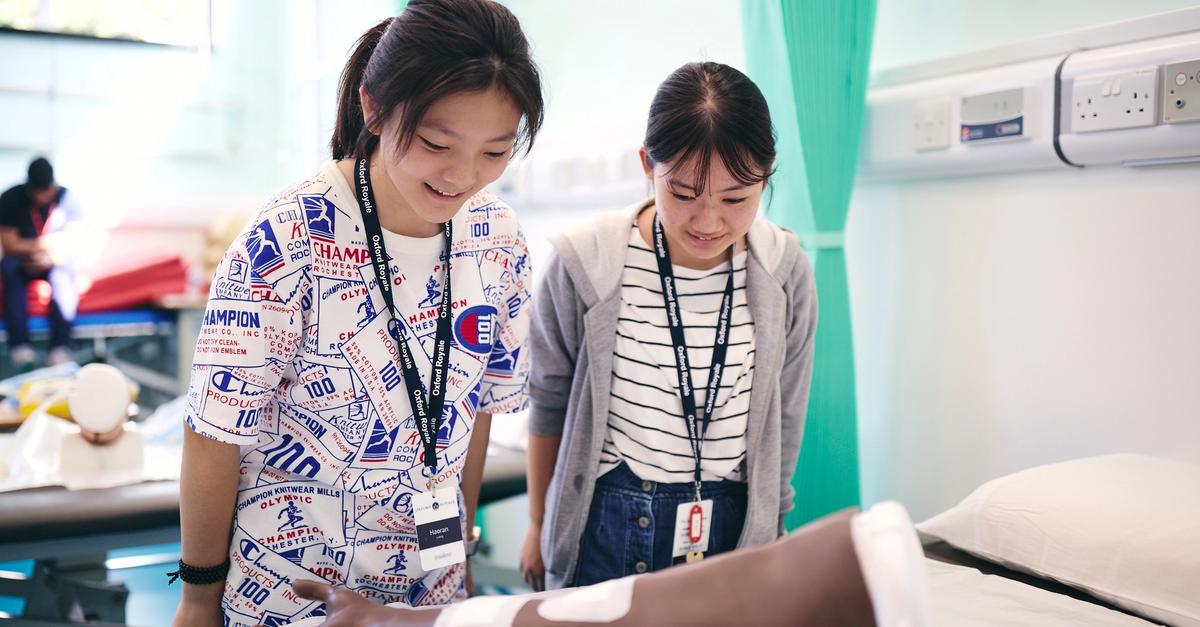
Activities vary widely. Imperial's 2026 course included a day of clinical skills workshops. Oxford Scholastica describes a four-hour mock clinic in which students interview patients with chronic conditions and present their findings to a doctor. Neither involves providing care, so read each course description closely.
Choose by the learning activities and family arrangements that matter most to you.
Identify the operator and distinguish university-run teaching from an independent provider using university facilities.
Separate patient interviews, hospital visits, simulations, and practical skills exercises when comparing clinical exposure.
Compare lectures, seminars, independent assignments, and individual feedback to understand the academic workload.
Confirm age-at-arrival rules, school-year requirements, residency conditions, and English-language expectations.
Confirm whether accommodation is included, optional, or unavailable for your chosen package.
Compare staff supervision, independent time, travel arrangements, and support for medical or dietary needs.
Ask which activities are guaranteed and which depend on the tutor or session.
A medicine summer program can be worth considering when you want a structured introduction to medical science or healthcare. Its value depends on whether the actual teaching and activities answer your questions about the subject.
A short course offers only a limited view of studying or practicing medicine. Weigh that limitation against the total expense and compare academic teaching, simulations, and healthcare visits as distinct experiences.
UK medicine programs to compare first
These five options show the main choices: university-run courses, independent residential courses, a course you can extend beyond two weeks, and a fully inclusive weekly price.

University-run taster
A Taste of Health, Medical and Life Sciences
14 Jul – 24 Jul 2026 · 16-17 · £5,250 (2026 fee)
Flexible length
Closed
Medicine & Life Sciences Summer Course
July to August 2027, 6 sessions · 14-18 · From £6,345 (2 weeks)

Fully inclusive price
Closed
Pre University Medical Summer Course in Cambridge
07 Jul – 21 Jul 2026 · 15-17 · £3,195 per week, fully inclusive (2026)
Compare the highlighted programs
| Program | Best suited for | Why this fit |
|---|---|---|
University-run, London | Run by Imperial College London itself, with residential places only and no non-residential option. | |
University-run taster | Covers medicine alongside life sciences and psychology, which suits students still comparing related degrees. | |
Flexible length | One of the few options here that can be extended beyond two weeks. | |
Oxford or Cambridge setting | Runs in both cities; the provider states it is not associated with the universities whose facilities it uses. | |
Fully inclusive price | Quotes one weekly price that includes accommodation and meals, which makes the total easier to compare. |
How should you compare program cost and value?
Compare the complete package and teaching commitment before deciding whether the fee fits your budget.
Check what the fee covers. Bucksmore quotes £3,195 per week as a fully inclusive price, while other providers list tuition, accommodation and meals separately.
Compare residential and day options. Imperial offers residential places only, while day courses such as Southampton's leave families to arrange travel and accommodation.
Compare course length as well as price. Reach Cambridge can be booked for two, four or six weeks, and the cost rises with each extra fortnight.
Check whether a fee is for 2026 or 2027. Several providers had not published 2027 fees when we checked.
Add travel, insurance, spending money and any excluded meals to the total.
Look at free or subsidised university options as well. Southampton's two-day Experience Medicine costs £400, with 50% subsidised places and full bursaries for eligible students.
Discuss this with a parent or guardian
Agree on the learning purpose, total budget, and practical arrangements before paying a deposit.
Set a total budget covering tuition, accommodation, travel, meals, and personal spending.
Review deposit requirements, payment timing, cancellation terms, and refund conditions together.
Confirm the accommodation location, room arrangements, meal coverage, and supervision outside teaching hours.
Discuss the balance of academic teaching, simulations, hospital visits, and any explicitly described patient interaction.
Confirm dietary needs, medical support, emergency contacts, and rules for independent time.
Browse UK medicine programs on Succeed
July to August 2026, 2 sessions · In-person / Cambridge · 13-15 or 16-18
07 Jul – 21 Jul 2026 · In-person / St Catharine's College, Cambridge · 15-17 · £3,195 per week, fully inclusive (2026)
Medicine in Oxford
Closed
July to August 2027, 3 sessions · In-person / Oxford (also runs in Cambridge) · 16-18 · £7,995
July to August 2027, 6 sessions · In-person / Cambridge · 14-18 · From £6,345 (2 weeks)
In-person / London · 16-17 · £7,695 (2026 fee)
14 Jul – 24 Jul 2026 · In-person / Warwick campus, Coventry · 16-17 · £5,250 (2026 fee)
December 2026 to August 2027, 4 sessions · In-person / Oxford or Cambridge · 16-19 · £6,950 (summer 2027)
27 Jun – 11 Jul 2027 · In-person / Brighton · 15-17
In-person / London · 15-18
Find programs that may fit you
Answer a few quick questions about your interests, age range and budget, and we'll suggest programs that may be worth exploring.
Step 1 of 3
What subject are you interested in exploring?
Selection reviewed by
Sean Stevens
Co-founder, Succeed | Founder, Immerse Education (2012–2026)
Sean works at the intersection of academic enrichment, program quality and university preparation, with expertise in evaluating pre-university experiences for ambitious secondary school students.
UK medicine summer program FAQs
It depends on the course, so read the description closely. Oxford Scholastica describes students interviewing patients in a mock clinic and discussing their findings with a doctor. This is not the same as providing care, and most courses rely on classroom teaching, simulations and visits.
Not always, so check who operates the course. Imperial College London and the University of Warwick run their own courses. Independent providers such as Academy Royale International use college or university buildings but state that they are not associated with those universities.
Academic teaching explores scientific concepts through lectures, seminars, assignments, and discussion. Simulation uses practice scenarios or equipment, such as mock emergencies or skills exercises, and should be compared separately from hospital visits and patient interaction.
It depends on the provider and package. Imperial offers residential places only, Bucksmore's weekly price includes accommodation and meals, and Southampton's two-day course does not provide accommodation.
Check the entry rules for each course. Several set English-language requirements for students whose first language is not English: Bucksmore asks for at least B2 (upper-intermediate), Kings asks for IELTS 5.0 or equivalent, and Imperial expects strong English skills. Some university access programs are open only to UK students.
Year groups describe a student's stage at a UK school: Year 12 is usually the first year of A levels, at age 16 to 17. Some university outreach programs use year groups instead of ages, so international families should check how their school system compares.
Yes, some universities run low-cost or free options. Southampton's Experience Medicine costs £400, with 50% subsidised places and full bursaries plus up to £100 of travel support for eligible students. ARU ran a free residential medical program for Year 12 students in July 2026; check whether it will run again.
Sources & verification
Source types reviewed
- Summer School Dates and Fees — Oxford Scholastica
- Apply to Atlas Summer Courses
- Prices and Dates — Atlas Summer Courses
- Medicine in Oxford, Ages 16–17 — Atlas Summer Courses
- Medicine Summer School — Atlas Summer Courses
- Experience Medicine with LifeLab — University of Southampton
- Pre-University Summer School Dates and Fees — University of Warwick
- Pre-University Summer School Courses — University of Warwick
- Summer Academic Experience Courses — University of St Andrews
- Medicine Summer Academic Experience Course — University of St Andrews
- Medicine Summer School — Oxford Summer Courses
- Experience Medicine, Ages 15–18 — Oxford Scholastica
- Discover Medicine Course, Ages 12–14 — Oxford Scholastica
- Visit the UK as a Standard Visitor: Visit to Study — GOV.UK
- Medicine Summer Schools — Medical Schools Council
- Nottingham Sutton Trust Summer Schools — University of Nottingham
- Amplify Your Summer Medical Programme — Anglia Ruskin University
- LifeLab Medicine Summer School — University of Southampton
- Science, Engineering and Medicine Undergraduate Summer School — University of Sussex
- From Classroom to Clinic: Essential Skills for Medicine — UCL
- Pre-University Summer School — King's College London
- Pre-University Medical Science — King’s College London
Succeed uses official provider information where available, then keeps this hub focused on comparison, planning and shortlisting.
What we verified (on 9 Oct 2026)
UK location checked
Operator identity reviewed
Age requirements reviewed
Teaching activities distinguished
Accommodation inclusions reviewed
Funding conditions reviewed
How Succeed uses this information
We use source material to check core facts and explain why programs may be worth considering. Students and parents should still review the current official provider page before applying or paying.