Summer Springboard High School Summer Programs
- 2027 program
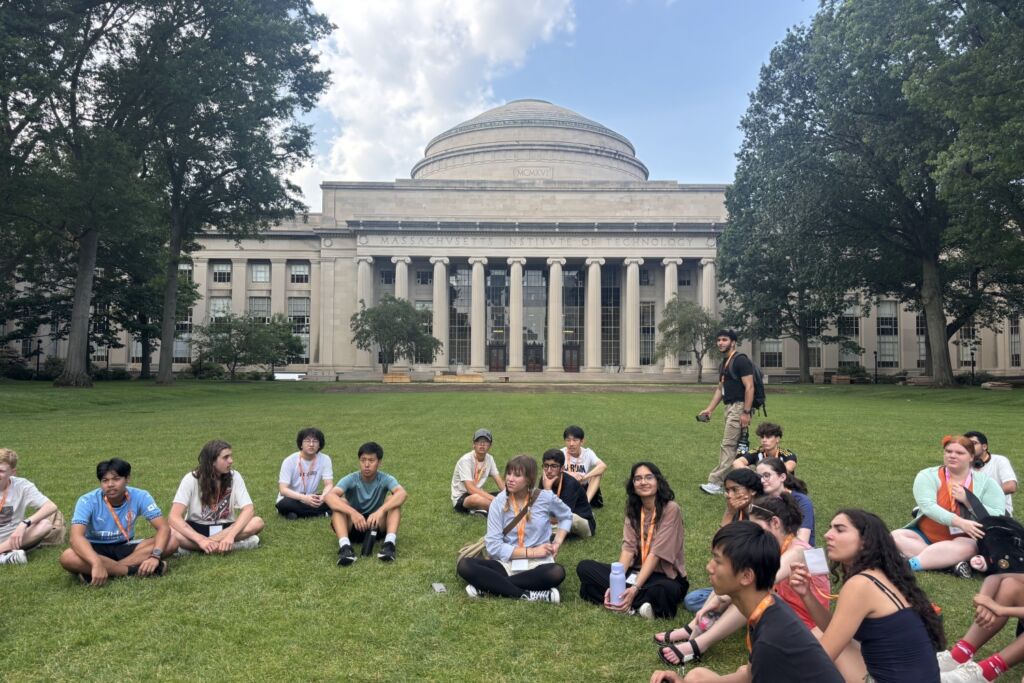
You pick one course from more than 60, in fields from medicine and engineering to business, law and design, and spend most mornings on it in a small group. Afternoons bring field trips, guest speakers and college readiness workshops. Most sessions last two weeks, while Yale runs one-week courses you can stack, and you either live in the dorms or commute in for weekday programming. Summer Springboard runs the courses itself on 16 US campuses and one in Barcelona, and apart from Cal Poly, NYSID and UW Foster School of Business, which run it in partnership, the host universities have no part in the program.
 Sean Stevens · SourcesSucceed has a commercial partnership with this provider.
At a glance
Official facts · checked 25 Nov 2026- 2027: 13 to 25 June (Georgia Tech Session 1), 13 to 25 June (Berkeley Session 1), 20 June to 2 July (Berkeley Session 2), 20 June to 2 July (UCLA Session 1), 20 June to 2 July (Georgetown University Session 1), 20 to 26 June (Yale University Session 1, one week) and 36 more
- Completed 8th grade by the program start date (rising 9th graders through graduating seniors). International students show English proficiency by phone interview or TOEFL 490 paper / 60 iBT, Cambridge PET-Distinction or FCE-C, or SAT 450 Reading/Writing
- 2027: $6,298 residential, $3,298 non-residential (Berkeley Session 1), $6,298 residential, $3,298 non-residential (Berkeley Session 2), $4,298 residential, $2,498 non-residential (Yale University Session 1, one week), $6,298 residential, $3,298 non-residential (Berkeley Session 3), $4,298 residential, $2,498 non-residential (Yale University Session 2, one week), $4,298 residential, $2,498 non-residential (Yale University Session 3, one week) and 7 more
- In person, University dormitories, New York, Berkeley, Cambridge, San Luis Obispo, Durham, Washington, DC, Atlanta, Los Angeles, Ann Arbor, San Diego, Santa Barbara, Nashville, New Haven, Seattle, Barcelona
- Length
- 1 to 2 weeks per session, combinable up to 6 weeks
- Included / budget separately
- Included: accommodation, meals (Three meals a day for residential students, lunch only for commuters). Separately: application fee from $99 ($149 after 21 February 2027, $199 after 18 April 2027), non-refundable, mandatory $250 course supplement on some courses, airport transfer $95 each way ($195 outside the group window), Unaccompanied minor transfer $145 each way in total (the $95 transfer plus a $50 supplement, airline fees extra)
- Deposit and refunds
- Deposit $600. Cancel before 1 March: 100% of tuition is refunded, except the $99 application fee
- Financial aid
- Need-based scholarships cover up to 30% of residential tuition or up to 60% of commuter or online tuition, from a limited pool
- Apply by
- 2027: 21 February (1st Wave), 18 April (2nd Wave), 16 May (Final General Admission)
- Cohort and selectivity
- Students who meet the published criteria (completed 8th grade, 3.0 GPA, English proficiency for international students) are admitted after an individual review, and courses fill first come, first served, with some programs closing or waitlisting after each wave deadline
- Credit or certificate
- Completion certificate and letter of recommendation from the course instructor. Courses at the New York School of Interior Design also earn 1 NYSID college credit
- Official page
- summerspringboard.com
Get the key facts by email
The dates, costs and how to apply, then 2 reminders: 2 May (2 weeks before) and 13 May (3 days before).
Should you apply?
SucceedWhy it's worth it
The course comes with a full taste of college life: field trips and guest speakers tied to your subject, workshops on college applications and public speaking, and reflection sessions on majors and careers. So two weeks can tell you a fair amount about whether pediatrics, trial law or aerospace engineering suits you.
What it asks of you
Mostly money. Two residential weeks at Berkeley are listed at $6,298 before supplements and flights. The days are long too, with your course starting at 9am and activities running until a 10:30pm bed check.
Who should skip it
Students who want credit or a competitive credential, because outside Cal Poly and NYSID you get a completion certificate and an instructor's letter rather than credit. Admission rests on a 3.0 GPA and finishing 8th grade, not on beating other applicants.
What does a day on campus look like?
Mornings are for your course, and the rest of the day mixes field trips, workshops and social time. At Berkeley the course runs from 9:00am until lunch at noon. Then comes an afternoon block called Academics in Action, which might be an instructor-led activity, project work, a guest speaker or an excursion (every course gets at least one trip off campus), or recreation instead. The 3:30pm slot holds college readiness workshops, where you choose two 90-minute sessions from speaking with confidence, money management, leadership and college prep. It also holds True You, two small-group reflection sessions, one at the start of the program and one at the end.
Commuters leave around 5:00pm. Residential students have dinner at 6:00pm, clubs or evening activities from 7:00pm and night checks at 10:30pm, and the Yale schedule adds free time at 8:30pm. Weekend excursions are included for two-week residential students, such as a day at California's Great America or a photo scavenger hunt around San Francisco from Berkeley. Bring a laptop for your course, and expect to keep your phone off in class.
Who can enroll in a high school course?
You need to have finished 8th grade by the start date and have a 3.0 GPA or your school's local equivalent. Seniors who graduated in the spring can also enroll. Summer Springboard reviews each application individually against these criteria.
International students prove their English in a phone interview or with one of these scores: TOEFL 490 on paper or 60 on the iBT, Cambridge PET with Distinction or FCE at grade C, or 450 in SAT Reading and Writing. Summer Springboard also screens against what it calls Essential Eligibility Criteria. These include managing your own medication, following staff instructions in English and walking more than a mile between buildings, and some students may be asked for medical documentation. Some host universities may require vaccination for in-person programs. Courses are filled first come, first served, so a popular course can fill up even when you qualify.
How do you apply and hold a place?
You apply through Summer Springboard's enrollment page, which leads to its online portal.
Create an account with basic contact details and confirm the verification email.
Pick your campus, session, course and residential or commuter tuition, then complete the application, including the short-answer essay questions, which takes about 30 minutes with the student present.
Pay the $600 deposit and the application fee to hold your place. The fee is $99, rising to $149 after 21 February 2027 and $199 after 18 April 2027.
Expect a decision by email within 5 to 7 business days, after which the Code of Conduct, waiver and medical forms open for the student and a guardian to sign.
Return pre-departure documents by 1 May 2027 if you enrolled before 25 April, or within 7 days of acceptance if you apply later. Documents that arrive late cost $50.
What will a session really cost?
Tuition is set campus by campus. For 2027, Berkeley lists $6,298 residential or $3,298 commuter for two weeks. Yale lists $4,298 residential or $2,498 commuter for a first week, with each extra Yale week at $3,498 or $1,998. Those are the rates before tuition goes up on 1 December 2026, and Summer Springboard hasn't published the new figures, so confirm the price when you book.
Residential tuition covers your dorm room, all meals, the course and excursions, plus weekend trips for two-week students and for anyone staying more than one week at Yale. Commuter tuition covers lunch, the course, excursions and weekday programming from 9am to 5pm, and Berkeley commuters pay $125 a day to join weekend excursions. On top of either option come the application fee (from $99), a mandatory $250 supplement on some courses such as Pre-Med, Surgery, Nursing and Fundamentals of Engineering, and your flights. Tuition doesn't include health insurance, which every student must have.
Airport transfers cost $95 each way, or $195 outside the group pick-up window. Students 14 or younger must fly as airline unaccompanied minors, which adds $50 each way to the transfer on top of whatever the airline charges. Summer Springboard also suggests bringing $100 a week in spending money.
The deposit and application fee hold your place, and the rest is paid in installments due by 10 May 2027, with a $150 late fee after that. Need-based scholarships cover up to 30% of residential or 60% of commuter tuition from a limited pool, but they can't go toward the deposit or the application fee. Refunds shrink quickly through the spring, as the table shows. An optional $699 Tuition Protection Plan, bought when you apply, lets you cancel for any reason up to the start date and get back what you've paid, apart from the $699 itself.
| If you cancel | Tuition refunded |
|---|---|
| Before 1 March | 100%, minus the application fee |
| 2 March to 1 April | 100%, minus the deposit and application fee |
| 2 April to 1 May | 75%, minus the deposit and application fee |
| After 1 May | 25%, minus the deposit and application fee |
| After 1 June | Nothing |
What do you leave with?
You get a completion certificate and a letter of recommendation from your instructor, but you have to earn them. Summer Springboard can withhold both for Code of Conduct breaches or for not taking part. College credit is only offered at two campuses: 1 credit through Cal Poly's Extended Education, and 1 college credit at the New York School of Interior Design that counts toward a NYSID degree or can go on your college applications.
Some courses also give you something concrete. Past Berkeley Emergency Medicine students earned Red Cross CPR certification, Pediatrics includes infant and adolescent CPR/AED certification, and Design Thinking & Rapid Prototyping has you build a 3D printer that you take home. At Yale, Business & Entrepreneurship ends with a pitch to an expert panel. Outside the partner campuses, Summer Springboard runs the courses on its own, so your letter comes from a Summer Springboard instructor, not from the university whose campus you stayed on.
How are students looked after on campus?
Staff live alongside students around the clock. At Berkeley and Yale a mentor lives on each dorm floor, and at Yale the Campus Director, Assistant Campus Director and other staff also stay in the dorms. Staff are available 24 hours a day. Campus Directors hold a bachelor's or master's degree, and they go through background checks and training, as do RAs. In free time you can explore within set campus boundaries, but off campus you have to stay in a group of at least three. Rooms hold two to four students of the same gender with a shared bathroom. There's a bed check at 10:30pm, and breaking the in-for-the-night rule is grounds for dismissal.
Families fill in a medical form before the program. If a student gets sick or hurt, staff take them to the nearest medical facility and notify the parents, but the family pays any costs. Students keep and take their own medication. Alcohol, vaping and drugs are banned, and a student sent home for breaking the rules flies back at the family's expense with no refund.

Sean
Talk it through with Sean
Want to talk it through?
“I can help you compare the programs you're considering, think through the practicalities and work out what makes sense for you.”
What should you do next?
Frequently asked questions
More from Summer Springboard
- Advanced Neuroscience High School Course
- Aerospace Engineering High School Course
- AI & Society High School Course
- AI Design & Media
- AI Prompt Engineering
- Anesthesiology High School Course
- Animation High School Course
- Applied Mathematics High School Course
- Architecture Design & Restoration High School Course
- Architecture High School Course
- Artificial Intelligence: A Responsible Approach
- Astrophysics High School Course
- Automotive Engineering High School Course
- Behavioral Economics High School Course
- Biomedical Engineering High School Course
- Biotechnology High School Course
- Branding & Design High School Course
- Business & Entrepreneurship High School Course
- Business & Leadership High School Course
- Business Management High School Course
- Business, Strategy & Decision Making High School Course
- Cardiology High School Course
- Climate Change & Environmental Policy High School Course
- Communication & Society High School Course
- Constitutional Law High School Course
- Criminal Investigation High School Course
- Cybersecurity High School Course
- Dentistry High School Course
- Dermatology High School Course
- Design Thinking & Rapid Prototyping
- Digital Advertising High School Course
- Digital Marketing & Social Media High School Course
- DNA, Data and Discovery High School Course
- Ecology & Environmental Science High School Course
- Economics High School Course
- Electrical Engineering High School Course
- Emergency Medicine High School Course
- Energy for a Sustainable Society
- Engineering, Design and Global Innovation
- Engineering: A Project Based Introduction
- Entertainment Business & Media Management High School Course
- Entrepreneurship Essentials
- Environmental Engineering High School Course
- Environmental Science High School Course
- Experience Design High School Course
- Extended Reality High School Course
- Fashion Merchandising High School Course
- Filmmaking High School Course
- Finance & Investing High School Course
- Fintech High School Course
- Foreign Affairs High School Course
- Forensic Science High School Course
- Foundational Robotics High School Course
- Foundations of Human Genetics
- Foundations of Literature & Writing High School Course
- Fundamentals of Engineering High School Course
- Fundamentals of Medicine High School Course
- Game Development High School Course
- Generative AI & Machine Learning
- Global Business High School Course
Similar programs
- Academic Insights – Artificial IntelligenceImmerse Education
- Summer High School Academic Program for Engineers (SHAPE)Columbia University Pre-College Programs
- EDG:ECarnegie Mellon Pre-College Programs
- Technology & AI Summer CourseOxford Scholastica Academy
- Game Design in Extended RealityNortheastern University Pre-College Programs
- NYLF Explore STEM Junior Summer ProgramEnvision
- Artificial Intelligence Summer CourseAtlas Summer Courses
- Cyber Security BootcampCurtin University Dubai
Sources
- High School & Middle School Programs - Summer Springboard
summerspringboard.com · Official page
- Summer Springboard in Berkeley
summerspringboard.com
- Application and Enrollment FAQ
summerspringboard.com
- Staff and Safety FAQ
summerspringboard.com
- Campus Life FAQ
summerspringboard.com
- General Information FAQ
summerspringboard.com
- summerspringboard.com/terms-and-conditions
- Main FAQ | Knowledge Base
summerspringboard.com